Every year, the International Downtown Association (IDA) brings place management leaders from around the world together to compare notes, share wins, and discuss challenges we’re still grappling with. This September, our team traveled to Toronto for the 72nd Annual Conference & Marketplace, held September 1-3 and co-hosted by the Downtown Toronto BIA Alliance and the City of Toronto.
Toronto was a fitting host city. It’s the birthplace of the Business Improvement Area model, launched in 1970 when merchants in Bloor West Village banded together to strengthen their main street. This year’s theme, Intersections: Where Districts, Disciplines & Ideas Converge, explored how downtowns are shaped where people, ideas, and progress meet.
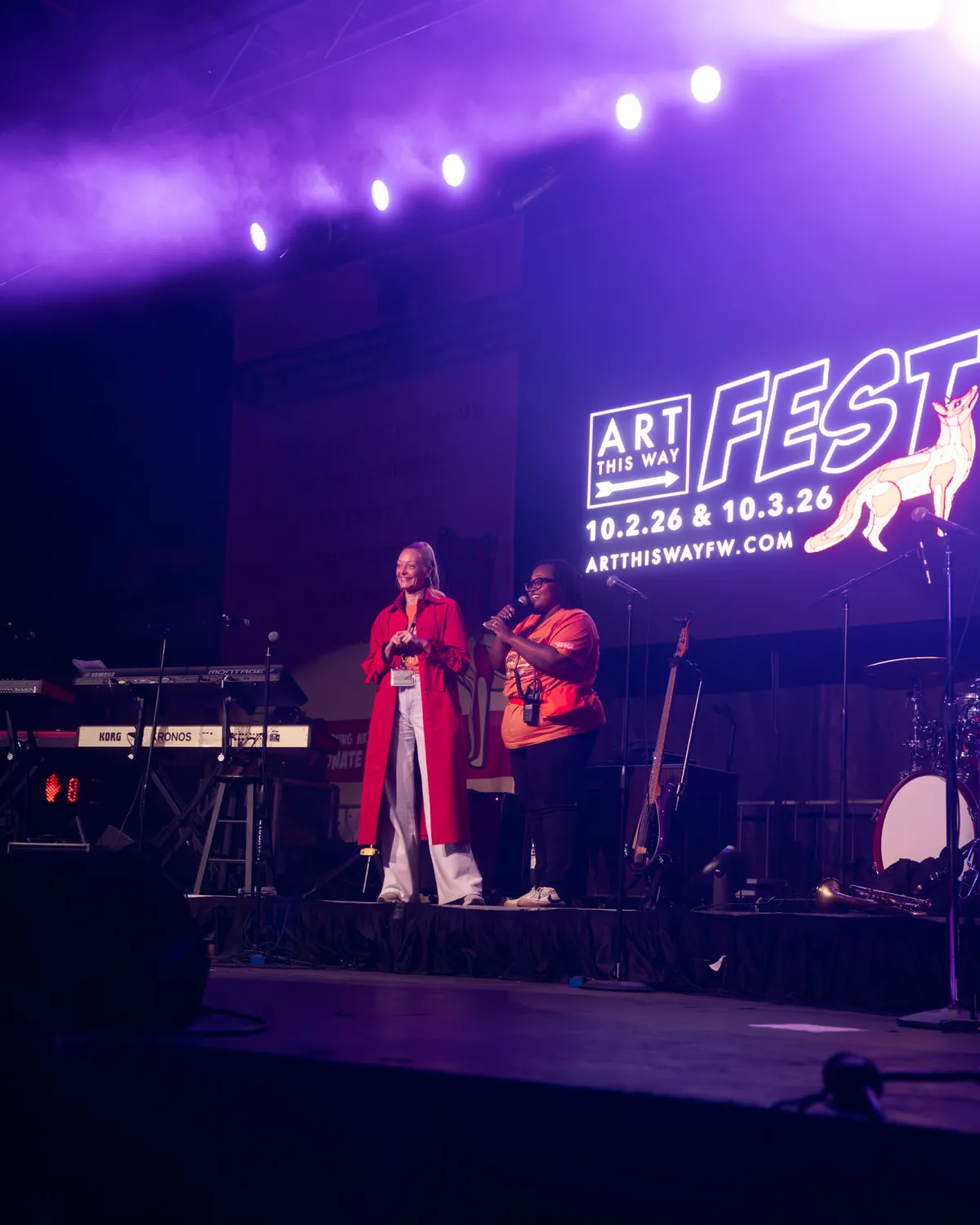
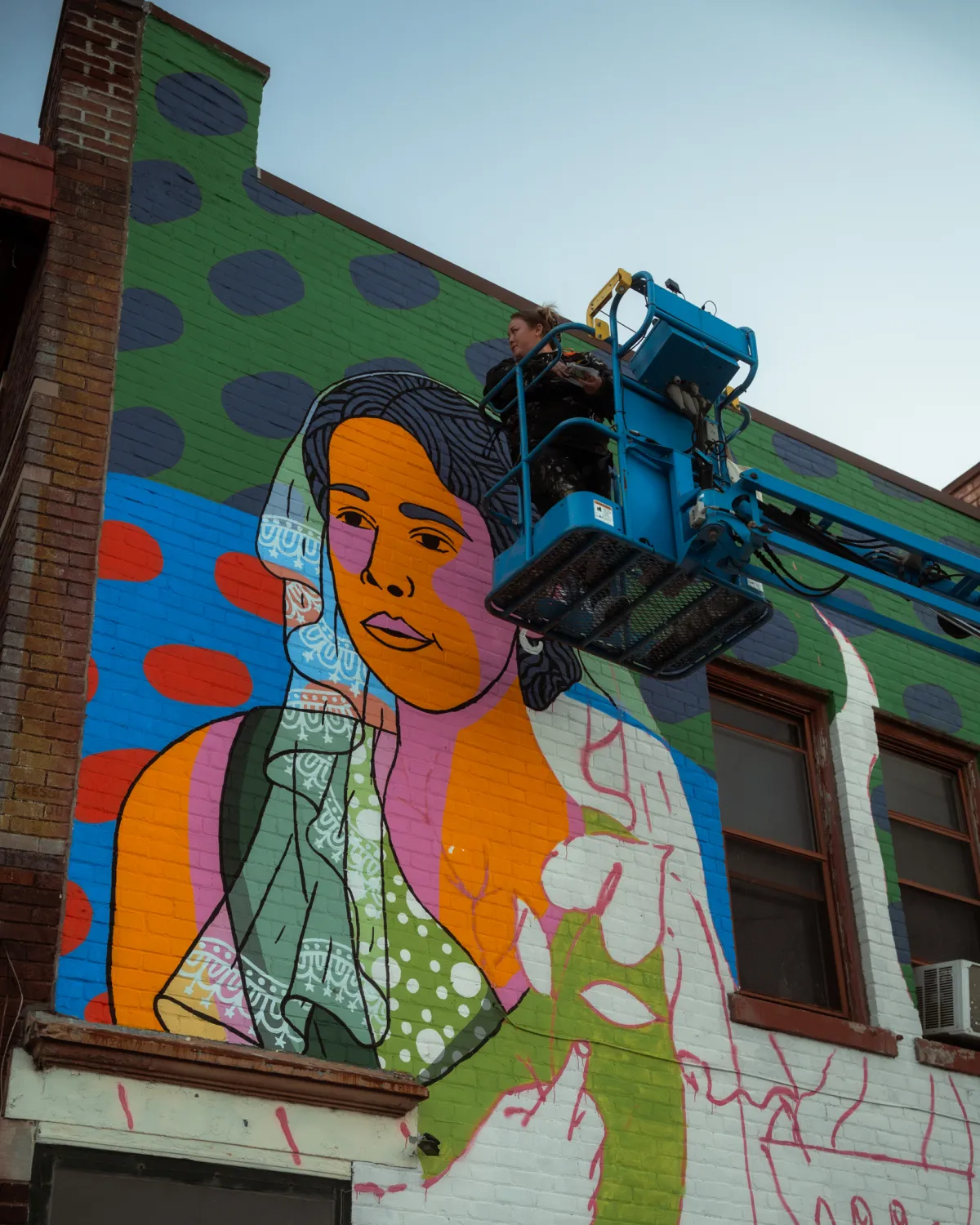
For our team, it was an especially meaningful trip. Alex was invited to speak alongside Gehl, a people-first urban design firm, about our alleyway public realm work through Downtown’s Art This Way program. Here are our takeaways.
Alex Hall: Building a “Durable Downtown”
It was an honor to be asked to speak at IDA. Gehl focuses on “people-first planning,” meaning urban design centered on human behavior, social interaction, and pedestrians rather than vehicles. Our Art This Way program is increasingly the model other cities look to for public art and public realm work. Peer organizations in Boston, Philadelphia, and Arlington are asking us to share what we’ve learned. It was humbling to be recognized among our peers.
Most sessions came back to one question: how do we build a durable downtown? Office demand and its built-in foot traffic can no longer carry a downtown on their own. Every downtown is adjusting to a post-COVID economic model, and occupied office space is no longer the only measure of a healthy city. Across the country, cities are converting vacant offices to residential and investing in the amenities new residents need: groceries, pharmacies, dog parks, wider sidewalks, bike lanes, transit, daycare, shade trees, gyms, and cultural experiences.
Workers in Fort Wayne are still commuting Downtown, but we’re in the business of preparing for a different future. The Progressive Urban Management Associates 2026 Global Trends Report puts it plainly: “Experiences increasingly drive foot traffic, consumer spending, and place identity. Downtowns with strong cultural assets are better positioned than those without.”
The conference gave us a call to action:
Advocate for traffic calming and a more walkable city
Keep investing in arts and culture
Work with city partners and local businesses to provide amenities for our Downtown residents
Trevor Saunders: Strategy, Resources, and Public Activation
The conference reinforced the importance of long-term strategic planning for Downtown Improvement Districts. Patience, collaboration, and a willingness to adapt help an organization build a strong foundation and stay steady through changes in leadership. Community building was a central theme in nearly every session, and it was consistently named as a vital ingredient of successful downtowns worldwide.
We also see an opportunity to strengthen our role as the go-to resource for vacancies and economic development. With the help of District360, a platform built specifically for downtown and place management organizations, we could create a centralized resource for tracking vacancies, tenants, properties, and more. That information could help us spot trends and connect businesses and property owners with opportunities. Themed Downtown itineraries could also give visitors curated reasons to explore more of our businesses, attractions, restaurants, and public spaces.
Finally, the conference highlighted how much public activation matters, both in the moment and long after. Temporary installations like our upcoming “Flow” invite interaction, bring in visitors, keep people around longer, and generate business for surrounding shops and restaurants. Because they’re temporary and often portable, they’re a great way to introduce something new without permanent infrastructure.
Tamara Cummins: Music, Data, and Thinking Differently
Three sessions stood out for me.
Music Urbanism: Live Music = Healthy Downtowns. The number one necessity for a music city is affordable housing. An authentic music scene needs artists from all socioeconomic levels. Downtowns with an overabundance of overpriced housing push artists out, while downtowns with affordable housing invite creatives in, and the music scene flourishes.
Data Over Drama: Making Smarter Decisions About Events. From an economic development standpoint, an event’s success has more to do with the benefit to businesses than with attendance. A packed event that leaves the cash registers untouched is a reason to re-evaluate programming. A feel-good event isn’t enough. What matters is customer conversion that extends beyond the event itself.
Phase Zero: Start Small Before You Build Big. Cities sometimes test an idea with quick, low-cost changes before committing to a major project. Think of “phase zero” as the groundwork that happens first, before the big construction begins. The example presented was Tranquility Park in Houston, a park built to honor the moon landing, sitting next to city hall, theaters, and several hotels. Over time, the park’s fountains and water features wore down, and fixing them became too expensive for any one group to cover alone.
So the downtown district’s improvement organization got everyone in the same room: business owners, the city, and local philanthropists. Through roundtables and walks through the park, they worked together on a plan that built on what the neighborhood already did well. That first phase added regular events and activities, more green space, and a street layout that put people’s comfort first while still supporting local business, all for a modest investment. The park even hosted a 2026 FIFA watch party, and it’s now moving toward a larger phase that will tackle the water features.
My takeaway: sometimes the way past a downtown challenge is giving yourself permission to think differently about relationships, and about who might want to be part of the solution.
Preston Wallace: The Work Is Human
My biggest takeaway was a reminder that the real purpose of downtown work is human. We can talk about economic development, events, marketing, public space, and business support as separate functions, but it all comes down to creating the conditions for connection. It’s about turning space into place, so residents and visitors see themselves reflected, feel welcome, and feel like they belong.
Downtowns aren’t just “recovering.” They’re evolving, and we have to keep giving people meaningful reasons to choose Downtown. Great places are built with communities, not just for them. One line that stayed with me: placemaking is economic development. The experiences that bring people together also strengthen businesses, attract investment, and shape how people remember a city.
I’m also thinking differently about how we communicate this work. “Marketing promotes, storytelling reveals” was one of my favorite takeaways of the week. People connect with people, not information, and the strongest stories find the person, the emotion, and the tension behind what’s happening. As storytellers for Downtown, we have a responsibility to reveal the culture and people that make our community distinct.
Toronto also reinforced the value of being intentional with our time and energy. Asking “What are we uniquely positioned to lead on?” is a powerful filter for strategic planning, for partnerships, and for knowing when to say no.
Key Takeaways
Build a durable downtown. Advocate for traffic calming and walkability, keep investing in arts and culture, and work with partners to provide the amenities Downtown residents need.
Plan for the long term. Be the go-to resource for vacancies and economic development, and use temporary activations to bring people Downtown without permanent infrastructure.
Start small and measure what matters. Test ideas with low-cost changes first, judge events by what they do for local businesses, and make room for artists at every income level.
Keep the work human. Placemaking is economic development, great places are built with communities, and storytelling reveals what marketing alone can only promote.
The DTFW team came home from Toronto with four different sets of notes, but they all point in the same direction. A durable downtown isn’t built on office foot traffic alone. It’s built on people: the residents who live here, the artists who make it interesting, the business owners who take a chance on a storefront, and the visitors who give our team a reason to keep showing up for our community.
That means staying curious, starting small when we need to, and asking who else should be at the table. It also means telling the stories that make Downtown Fort Wayne feel like ours.
We’re grateful to IDA and our industry peers for the ideas, and we’re excited to put them to work Downtown.
We’d love to hear from you, too: what would make Downtown a place you choose again and again? Send your ideas to: info@downtownfortwayne.com